
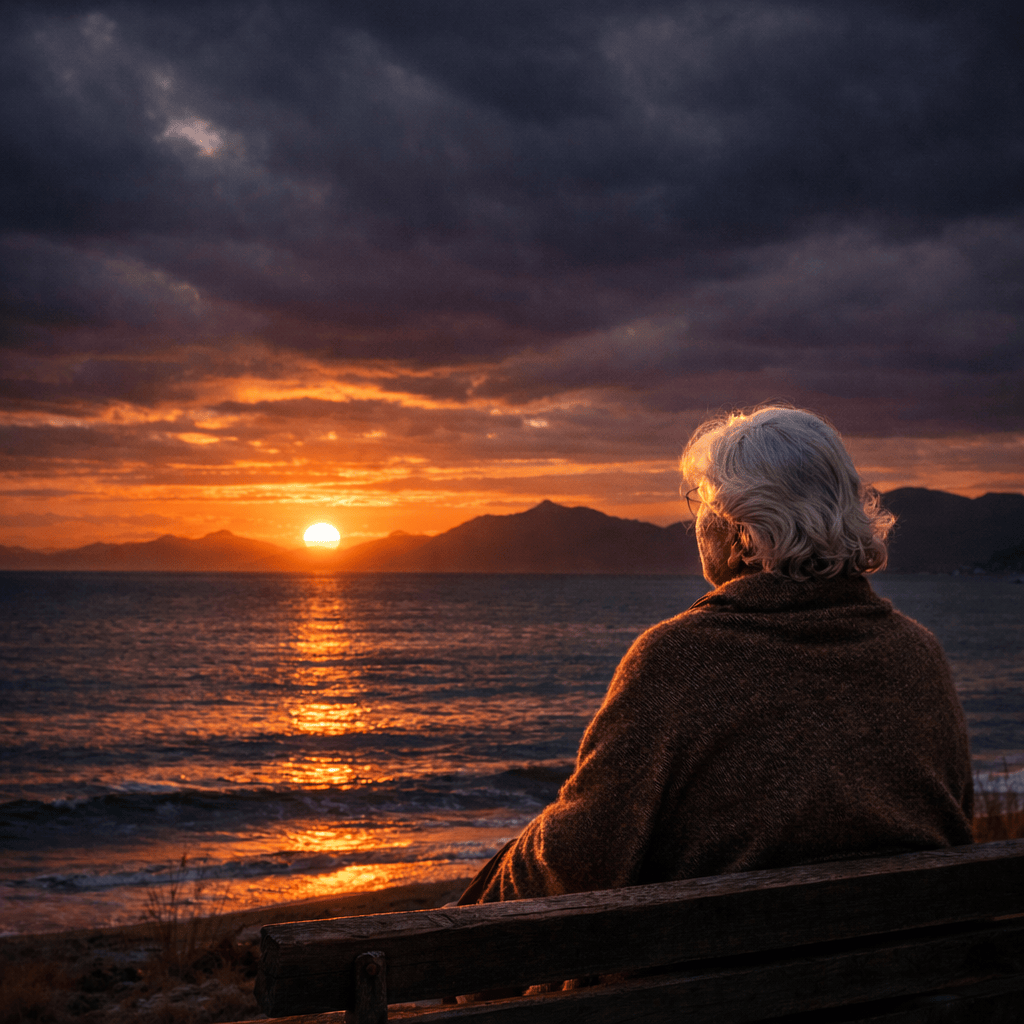
For some, getting older feels like a stigma… like something is slowly going wrong in your life.
At the beginning, everything is expansion. You have energy that feels endless, like you can eat the world in front of you. You fight every battle, chase every dream, and believe there will always be another chance, another season, another version of you.
Then, without really noticing, something starts to shift.
The body begins to slow down in quiet ways. Health changes don’t arrive all at once—they creep in. Energy is not as immediate. Recovery takes longer. And life, in some cases, becomes smaller. More contained.
For some, it is lived alone. For others, with a partner, or children, or both. But either way, there is a gradual taking away: of vitality, of independence, of that quiet sense of power you once didn’t even think about because it was always there.
Slowly, there is an involution—something that feels like a return, step by step, to a more dependent version of yourself. And when illness enters the picture—memory loss, dementia, Alzheimer’s, cancer, heart conditions, or any health challenge that changes your life—it doesn’t only affect the body. It can reshape identity, routine, freedom, and the way you see yourself.
I see the pain in my mother’s eyes.
And sometimes I also see resentment. Not just toward life, but toward the life she feels she didn’t fully live. The version of her story that existed in her mind—the one that felt more perfect, more aligned, more hers.
She left her country to come here with me. She lost her home in that choice. She lost familiarity. And in many ways, she lost independence—not only because of circumstance, but also because she placed a quiet barrier within herself: not fully opening to the language, the system, the new life.
And now she is getting older, and acceptance doesn’t come easily. Maybe it’s not even about reality—it’s about the image of herself she still carries inside.
It is not confusion. It is not illness. It is the way she chooses to see herself in the mirror—young, untouched by the passing years, still connected to the woman she feels she is inside.
And I understand that.
She can be younger in spirit if that makes her happy, if that keeps a light alive within her.
But it is hard to be my mother’s anchor while still being her daughter. Hard to keep everything in order when roles slowly reverse themselves in ways nobody prepares you for.
And I understand that it is painful for her too.
I don’t like being the bad cop. But sometimes love looks like structure. Sometimes care looks like boundaries. And sometimes holding things together means being the one who cannot fall apart at the same time.
She is not perfect. I am not perfect.
But the love is real in all its imperfection.
We love, we support, we live our imperfect lives under the same roof.
Our home is not quiet—it is alive. We fight, we kiss, we hug, we scream… it’s life.
And sometimes it is hard to hold space for all of it. Hard not to argue. Hard not to react. Hard not to feel overwhelmed by the weight of everything we carry together.
But even in that tension, there is something I know deeply:
I will never leave her alone.
Because love is not only the peaceful moments.
It is also the loud ones, the messy ones, the tired ones… and still choosing to stay.
Maybe growing older is not about losing everything…
maybe it’s about learning what love still remains when everything else changes.
Love you mom.
— TodayWaves
Scroll down ⬇️ explore the waves, subscribe, leave your thoughts, and share – Some one you know may need this words today.


Leave a Reply